The Sticky, Musty House: What Actually Fixes Humidity in Florida (and What Doesn't)
Cranking the thermostat down won't cure a clammy house, and some of the products sold for it won't either.
October 13, 2026 · 4 min read
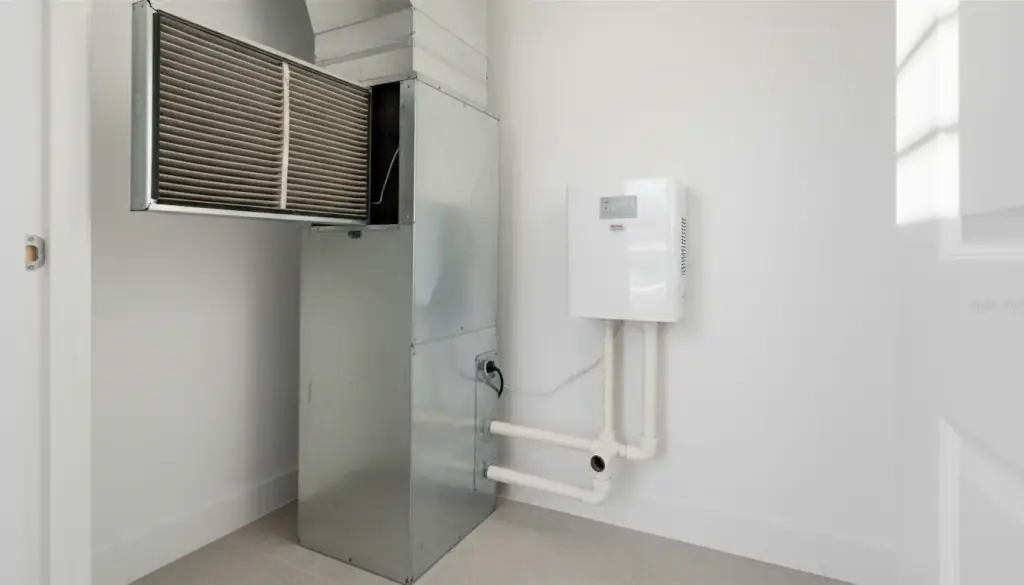
The thermostat says 74, but the house feels damp. The bathroom towels never dry. There's a faint musty smell in the closet, and the air coming from the vents isn't helping. If that sounds familiar, you've probably been fighting the wrong thing. On the Treasure Coast, the real enemy isn't heat. It's humidity.
Why cold doesn't mean dry
An air conditioner removes moisture only as a side effect of cooling. It has to run long enough, at a steady pace, for water to condense on the coil and drain away. If the system is too big for the house, it cools the air quickly and shuts off before it has pulled much moisture out. Then it turns back on a few minutes later. The temperature looks right, but the air stays sticky.
Other problems cut into the drying too: a dirty coil, weak airflow, a clogged filter, or leaky duct pulling hot, wet attic air into the system. That's why fixing humidity starts with the basics, not with a gadget.
Fix the basics first
- Clean the indoor and outdoor coils so the system can actually shed heat and moisture
- Clear and treat the condensate drain line so water leaves instead of sitting in the pan
- Replace or upgrade the filter so airflow stays strong
- Seal duct leaks, especially in the attic, so humid air isn't getting sucked in
- Check the system size against the house, because a system that's too big short-cycles and leaves moisture behind
Many sticky houses get better after those steps alone. We'd rather start there than sell you equipment you may not need.
When you need more than the basics
Sometimes a well-tuned system still can't keep up, especially in a tight, newer house, or in the shoulder months when the weather is mild but muggy. That's when add-ons start to make sense. In the order we usually talk about them:
Whole-home dehumidification
A whole-home dehumidifier ties into your ductwork and removes moisture on its own schedule, without needing the air conditioner to run. If humidity is your main complaint, this is usually the fix that does the most. It beats the portable units you drag from room to room, which cover one space and need emptying. We can also add fresh-air intake, which brings in outside air in a controlled way, so the house doesn't feel stale.
Media filter cabinets
A standard one-inch filter catches big dust and not much else. A 4-inch or 5-inch media filter cabinet has far more surface area, so it traps more fine dust and lasts longer between changes, without choking airflow the way a cheap thick filter can. If you have allergies or you're tired of dusting every few days, this is a sensible upgrade.
UV lamps and coil treatment
UV lamps installed near the indoor coil can help keep the coil surface and drain pan cleaner. Coil treatment does a similar job another way. Where it makes sense, these can help with that musty smell at the vents, particularly if the odor comes when the system first starts. They are not a substitute for cleaning a dirty coil, and a lamp pointed at a filthy coil doesn't fix much.
When an add-on isn't worth your money
We'll tell you plainly when something isn't worth it. If the real problem is leaky duct, a dehumidifier is a bandage. If the system is too big and the house isn't leaking, a bigger fix may be needed. If the coil is dirty, clean it first. And a product that promises to cure everything, from smell to allergies to energy bills, deserves a skeptical look. Ask what it does, what problem it solves in your house, and how you'd know it worked.
Musty smells in the duct itself are a separate question. We also offer duct cleaning with sanitizing and mold-remediation options, and we'll inspect before recommending any of it.
One more habit that helps: pay attention to when the stickiness shows up. If it's worst after a rainstorm, on mild days, or in the rooms farthest from the air handler, that points toward different causes, and each one has a different fix. Tell the technician what you've noticed. Small details like that often save an hour of testing and keep you from paying for the wrong repair.
What to do next
Tell us what you notice: the sticky feeling, the smell, which rooms are worst, and when it happens. A tune-up is a good first step, and new customers can book ours for $69. From there we'll tell you whether you need a small fix or a bigger one. Call (772) 284-5774 and we'll talk it through.
Super Cool of the Treasure Coast, Inc., (772) 284-5774
Call (772) 284-5774More articles
Salt Air and Your AC: Why Some Treasure Coast Systems Quit at Nine and Others Reach Fifteen
Two houses on one street can own the same system, and one still quits years earlier than the other.
Water Around Your Air Handler: Why the Drain Line Clogs Every Summer and What to Do
A puddle by the air handler is the most common cooling problem on the Treasure Coast, and it's usually fixable fast.